
There is a word we use almost casually now: ADVOCATE. We attach it to job titles, organizational charts, and program budgets. But if you slow down long enough to look at what an advocate actually does, day after day, case by case, crisis by crisis, you will find something extraordinary. You will find a person who chose to stand in the gap between a survivor's worst moment and the rest of their life.
This post is for them. All of them.
The ones with business cards and the ones without.
The volunteers who answer phones at midnight.
The nurses who hold someone's hand during the hardest exam of their life.
The attorneys who fight without flinching.
The housing coordinators who answer the same question with the same patience the tenth time as the first.
Survivors rarely travel alone. And the people who walk beside them deserve to be seen.
"Advocacy is sustained presence, not a single dramatic gesture." — Dr. Arlene Daniels
The Many Faces of Advocacy
Crisis Hotline Advocates
At 2 a.m., when a survivor cannot call a friend and cannot think clearly and cannot stop shaking, there is someone on the other end of a phone or chat who picks up. Hotline advocates are trained in crisis intervention, de-escalation, safety planning, and trauma-informed listening. They may only have one conversation with a survivor, and they make it count. Their work is largely invisible, and it saves lives.
Resource:National Domestic Violence Hotline | 1-800-799-7233
Hospital and Medical Advocates
When a survivor arrives at an emergency room, they often face a system that was not designed with them in mind. Medical advocates bridge that gap. They accompany survivors through examinations, explain procedures, make sure rights are respected, and offer a steady human presence during what is frequently a retraumatizing experience.
Sexual Assault Nurse Examiners (SANEs) occupy a uniquely powerful role in this space. SANEs are specially trained nurses who respond to hospitals when a sexual assault patient presents, providing forensic evidence collection, medical care, and emotional support. Their precision and compassion can directly affect whether a case is ever prosecuted, and whether a survivor feels believed from the very first moment they seek help.
Resource:International Association of Forensic Nurses
Legal Advocates
The legal system can be one of the most disorienting places a survivor ever navigates. Legal advocates serve as guides, translators, and tireless supporters throughout that process. Advocates help survivors deal with the emotional effects of ongoing legal tactics used by abusers, as well as assist with gathering documentation such as police reports, medical records, and prior court orders.
This work demands patience. Abusers frequently weaponize the court system, filing repeated motions and using legal proceedings as another form of control. A legal advocate who refuses to back down is not just doing a job. They are changing the balance of power.
Resource:WomensLaw.org Legal Help
Court Advocates
Courtrooms are intimidating by design. Court advocates walk through those doors with survivors, explain what is happening in plain language, accompany them to hearings, and help them feel less alone in a system that can feel profoundly indifferent. Court advocates provide both practical and emotional support throughout the legal process, and their presence can significantly reduce the stress and anxiety survivors experience.
Housing Advocates
Leaving an abusive situation is not just an emotional decision. It is a logistical one. Where will I go? Can I take my children? How will I pay for it? Victims are more likely to experience housing insecurity than those who have not experienced violence, and providing safe housing is key to helping survivors rebuild.
Housing advocates navigate emergency shelters, transitional housing applications, tenant protections, and public assistance programs on behalf of survivors who are already carrying far more than anyone should have to carry.
Resource:National Alliance to End Homelessness
Financial Empowerment Advocates
Economic abuse is one of the most effective tools of control. Abusers frequently destroy credit, drain accounts, and create financial dependency to trap survivors. Financial empowerment advocates help survivors understand their options, access emergency funds, open accounts safely, find employment resources, and begin to rebuild economic independence. Financial advocacy helps survivors secure housing, job training, benefits, and economic stability after abuse.
Resource:Purple Purse / Allstate Foundation
Immigration Advocates
For survivors who are undocumented, or whose immigration status is tied to an abusive partner, leaving can feel impossible. Immigration advocates understand both the legal pathways available (including VAWA protections and U-Visas) and the fear that makes survivors hesitant to reach out to any system. Free legal services for survivors can encompass safety, privacy, housing, employment, education, immigration, and financial stability. Immigration advocates hold all of this at once.
Resource:ASISTA Immigration Assistance
Child Advocates
Abuse does not happen in isolation. Children witness it, absorb it, and carry it. Child advocates work directly with young survivors of abuse as well as with children who live in homes where abuse occurs. They navigate child protective services, school systems, therapy referrals, and custody proceedings, always centered on what is best for children who had no say in any of it.
Resource:National Children's Alliance
Peer and Survivor Advocates
Some of the most powerful advocacy comes from people who have lived it. Survivor advocates bring something that no degree or training can manufacture: the firsthand knowledge that it is possible to get through. They sit with survivors in the places of deepest shame and say, I was there too, and I am still here. Research consistently shows that women who worked with advocates experienced less violence and depression, and greater access to resources and emotional support than those who had not.
Outreach and Community Advocates
Not every survivor can walk into a shelter or an office. Outreach advocates bring services to the people who need them, meeting survivors where they are, whether that is a rural community, a faith space, a school, or a neighborhood clinic. Outreach advocates offer mobile, community advocacy and can meet people where it is most convenient for them. They eliminate barriers that would otherwise keep survivors from ever accessing help.
Technology Safety Advocates
Abuse in the digital age has a new dimension. Stalkerware, location tracking, shared cloud accounts, surveillance cameras, and social media monitoring are all tools abusers now use. Technology safety advocates help survivors understand digital risks, secure their devices, and protect their privacy in ways that could determine whether they stay safe after leaving.
Resource:Safety Net at NNEDV
Elder Abuse Advocates
Older adults experience abuse, and they are often the least likely to report it. Elder abuse advocates navigate the intersection of domestic violence, aging services, medical systems, and adult protective services. Aging network professionals and domestic violence program advocates who work together and receive joint training are better positioned to identify and support older victims.
Resource:National Center on Elder Abuse
Policy and Legislative Advocates
Some advocates never sit across from a survivor directly. Instead, they sit across from lawmakers, testify at hearings, draft legislation, and fight for the systemic change that protects thousands of survivors at once. They fight for funding, for stronger protections, for better training for law enforcement, and for policies that actually reflect the reality survivors live. Their work is slow and unglamorous and absolutely essential.
Resource:National Network to End Domestic Violence
A Word About Documentation
One form of advocacy that too often goes unrecognized is the quiet, powerful act of helping a survivor document what happened to them.
Documentation advocates, safety planning specialists, and those who use tools like the Evidentiary Abuse Affidavit (EAA) give survivors a way to record their experiences in their own words, in a format that holds legal weight. This act of documentation is advocacy in its most fundamental form: it says that what happened to you is real, it matters, and there is a record that the world cannot erase.
Resource:Document the Abuse
"Your advocacy can spark a revolution of compassion and justice, transforming lives and communities."
When Advocates Work Together, Survivors Win
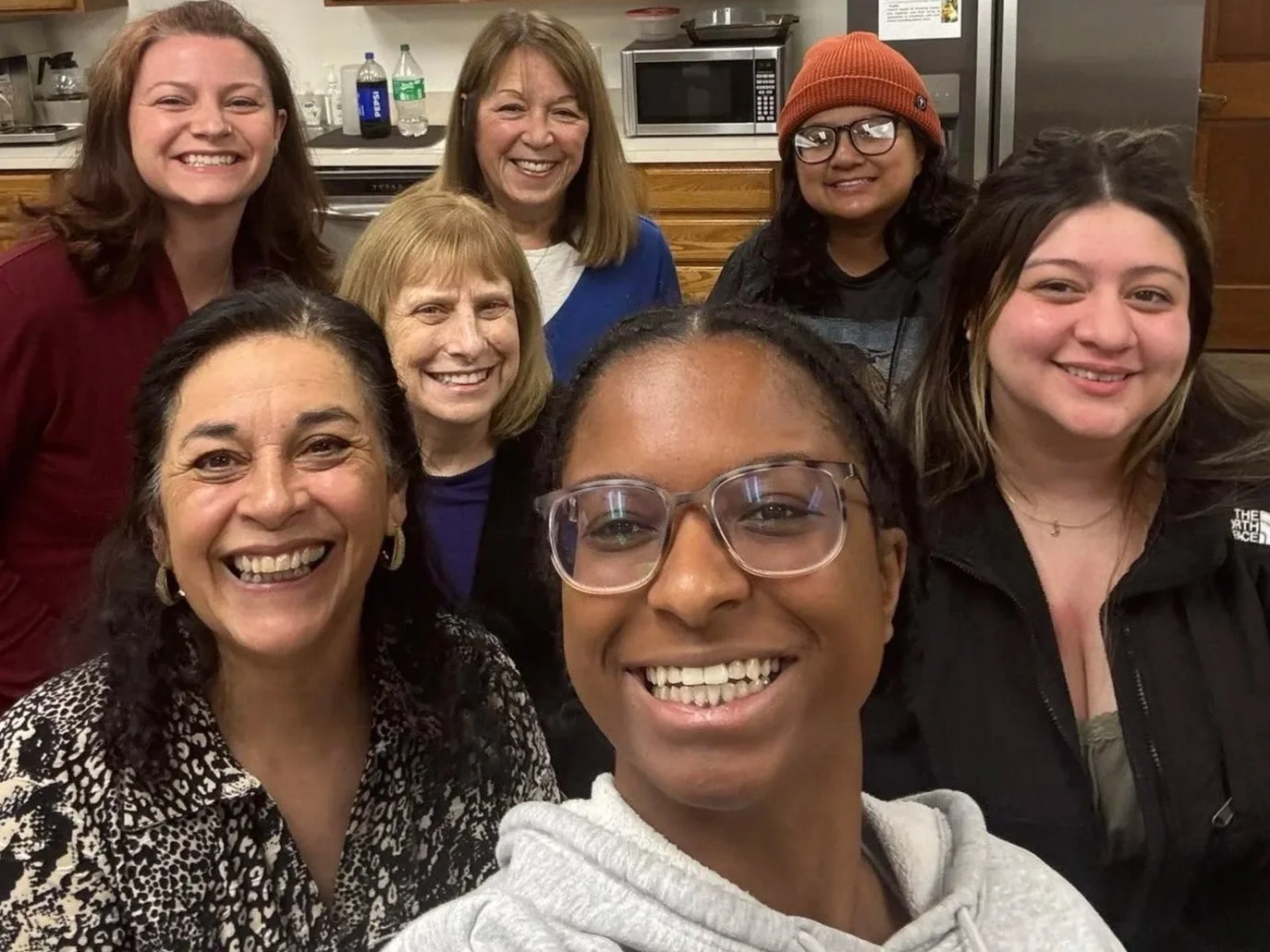
We are always proud to stand with advocates from other organizations where we cross train, share resources, and collaborate ideas.
There is a reason so many advocacy organizations exist. Abuse does not confine itself to one area of a survivor's life, and neither can the response to it. Legal needs, housing needs, medical needs, financial needs, the needs of children caught in the middle: each gave rise to its own specialized organizations, each staffed by people with deep expertise in one critical piece of the puzzle. That specialization is a strength. But it can also become a wall.
When organizations operate in silos, survivors are left to carry the weight of navigating between them, often while in crisis, often without transportation, childcare, or the emotional bandwidth to make one more phone call. When those same organizations choose to collaborate, to share knowledge, make warm referrals, and treat each other as partners rather than competitors, the survivor stops being passed around and starts being held. That is the difference between a system that technically offers services and one that actually delivers safety.
Advocacy is most powerful when it is a community, not just a collection of programs.
To Every Advocate Reading This
You answer calls when you are tired.
You sit with people in their worst moments.
You fill out forms and make referrals and follow up when it would be easier not to.
You absorb stories of cruelty and go home and come back the next day.
You do not do this for recognition. But you deserve it.
Every survivor who finds stable housing, who gets a protective order, who testifies in court, who opens a bank account in their own name for the first time, who heals in ways visible and invisible: that story has your fingerprints on it.
This field is only possible because of the people who choose it. And the movement for survivor safety is only as strong as the advocates who show up, every single day, and refuse to stop.
Thank you.
Other articles from our Learning Hub:
To Every Advocate that Feels They are Not Enough
The EAA Can Help Even If You Never Go to Court
Behind every download of the Evidentiary Abuse Affidavit, every resource accessed, and every article read is a survivor looking for a way forward. Your donation, whether a one-time gift or a recurring monthly contribution, makes sure those resources stay free and within reach. No survivor should have to go without the tools that could protect their life.

If you are a victim of violence, stalking, or harassment this link takes you directly to the Evidentiary Abuse Affidavit. CLICK HERE