When the Badge Becomes a Weapon
Officer-Involved Domestic Violence: A Hidden Crisis
Imagine calling 911 for help and realizing the person you fear most is the person who might answer the call. For thousands of survivors across the United States, that terrifying reality is not hypothetical. It is their everyday life. Officer-Involved Domestic Violence (OIDV) sits at the most dangerous intersection of power, silence, and abuse. And yet it remains one of the most underreported, underprosecuted, and underresearched crises in America.
At Document the Abuse, we believe that documentation is one of the most powerful tools a survivor holds. This post examines the scope of OIDV, the systemic forces that keep it hidden, real cases that reveal the cost of silence, and the role that the Evidentiary Abuse Affidavit (EAA) could play in changing outcomes for survivors.

When your abuser wears a badge, silence is not a choice. It is a sentence. The badge does not make violence less real. It makes it harder to escape.
What Is Officer-Involved Domestic Violence?
Officer-Involved Domestic Violence (OIDV) refers to domestic violence or intimate partner violence committed by law enforcement officers against their marital or intimate partners, children, and family members. According to Wikipedia's entry on OIDV, OIDV includes physical, sexual, emotional, economic, psychological, and technological abuse, as well as any pattern of coercive behavior by an officer toward someone with whom they share an intimate or familial relationship.
What makes OIDV uniquely dangerous is the abuser's access to firearms, insider knowledge of the legal and court system, familiarity with the location of domestic violence shelters, and trained skill in coercion and control. Responding officers are often colleagues of the abuser. The system designed to protect survivors is the same system the abuser navigates every day.
The Numbers: What We Know (and What We Don't)
Tracking OIDV with precision is extraordinarily difficult. There are no federal mandatory reporting requirements. No national agency tracks OIDV incidents as a distinct category. Victims face unique barriers to reporting, including fear of retaliation, economic dependence, and concern that fellow officers will not act against a colleague.
Despite these barriers, the data that does exist is alarming:
Early studies found that between 24% and 40% of police officer families reported incidents of domestic violence, compared to roughly 10% of the general population at that time. (Wikipedia: Domestic Violence in the United States)
A peer-reviewed systematic review published in ScienceDirect (2016) found that self-reported rates of officer-perpetrated domestic violence ranged from 4.8% to 40% across seven qualifying studies.
Research cited in Cambridge University Press (2022) suggests some sources estimate officers are four times more likely to engage in domestic violence than the general population.
In San Diego, just 42% of reported OIDV cases were prosecuted, compared to 92% of domestic violence cases involving civilians. (DomesticShelters.org)
From 2005 to 2007 alone, 324 media-documented cases involved officer arrests for domestic violence, spanning 281 separate officers across 226 agencies. (ScienceDirect)
In 2023, at least 38 Chicago-area officers were charged with domestic battery between 2011 and 2023, according to records obtained from the Cook County State's Attorney's Office. (Scholars Strategy Network)
On average, less than 2% of police academy training is spent on domestic violence response, while 17% is devoted to weapons and defensive training. (Scholars Strategy Network)
"Police officers in almost every state have been charged with domestic violence since the start of 2025. Such figures demonstrate that police officer domestic violence is a structural failure, not the isolated misconduct of 'a few bad apples.'" — Scholars Strategy Network, December 2025
States Where OIDV Is a Documented Concern
OIDV is a nationwide problem. Officers in virtually every state have faced domestic violence charges in recent years. However, several states stand out either for documented OIDV incidents, high overall domestic violence rates, or systemic failures in accountability:
Illinois
Home of the Drew Peterson case, Illinois currently ranks #16 for domestic violence rates nationally, with a reported rate of approximately 58.3% among affected populations. (WorldPopulationReview) Chicago's Cook County documented at least 38 officer domestic battery charges over a twelve-year period. Of these cases, at least 31 were dropped or dismissed, 3 resulted in not guilty verdicts, and only 2 led to convictions. (South Side Weekly)
California (Los Angeles)
The Los Angeles Police Department's own 1997 Inspector General report identified 225 OIDV complaints between 1990 and 1997. Alarmingly, 30% of officers with OIDV complaints were still promoted, and repeat offenders accounted for 31% of all domestic violence complaints within the department. The Inspector General who conducted the investigation later resigned in frustration over access restrictions. (Wikipedia: OIDV)
New Jersey (Newark)
Newark, New Jersey, was under a Department of Justice oversight decree for nearly a decade. Despite ten years of monitoring and reform mandates, the final report on the oversight period noted that domestic violence by Newark Police Department officers remained a serious concern even after the decree ended. (Scholars Strategy Network)
Why OIDV Victims Stay Silent: The Unique Barriers
Survivors of OIDV face a set of barriers that compound every challenge already present in civilian domestic violence situations:
The abuser knows the shelter system and can locate victims who flee.
Colleagues may respond to 911 calls and cover for the abusing officer.
Reporting could cost the officer their job, which can be weaponized against financially dependent survivors.
The Lautenberg Amendment (the federal Domestic Violence Gun Ban) means a domestic violence conviction strips an officer of the ability to carry a firearm, creating an additional dynamic that can increase danger: a threatened, humiliated abuser who is now also facing career destruction. (Public Health Post)
Victims often fear they will not be believed, or that the "blue wall of silence" will protect the abuser regardless of evidence.
A Personal Reckoning: The Drew Peterson Case
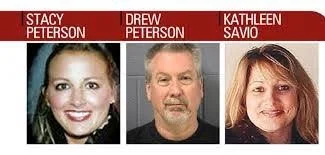
For Norma Peterson, Executive Director of Document the Abuse, OIDV is not a statistic. It is a family tragedy she lived firsthand. Norma is the sister-in-law of Drew Peterson, the former Bolingbrook, Illinois, police sergeant who became one of the most high-profile OIDV cases in American history.
Drew Peterson was convicted in 2012 for the murder of his third wife, Kathleen Savio, whose bruised body was discovered in a dry bathtub in 2004 and initially ruled an accidental drowning. His fourth wife, Stacy Peterson, disappeared in October 2007 and has never been found. Suspicion has always centered on Drew, though he has never been charged in Stacy's case.
Kathleen Savio did everything survivors are told to do. She sought an order of protection. She reported the abuse. She told the Bolingbrook police chief directly: "If anything happens to me, it's because Drew's killed me." Bolingbrook police were called to the home 18 times for domestic disturbances between 2002 and 2004. Drew used his badge and knowledge of the system to have Kathleen charged with domestic violence twice (she was acquitted both times). He was never charged. (A&E: Case File Drew Peterson; CNN)
Because Kathleen was dead and Stacy was missing, prosecutors could not put either victim on the stand. Illinois was forced to pass new legislation, commonly called "Drew's Law," allowing hearsay statements from unavailable witnesses under specific conditions. Even then, conviction came only after years of effort and a second autopsy. (Crime Museum: Drew Peterson)
The Peterson case stands as a chilling example of what happens when an officer uses the power of the badge to silence victims, manipulate investigations, and evade accountability. Norma and her family’s experience is precisely what drives DTA's mission: no survivor should have to fight this alone, and no abuser should be able to weaponize silence.
How the EAA Could Have Changed These Outcomes

The Evidentiary Abuse Affidavit was created from personal tragedy as much as professional purpose. Susan Murphy Milano grew up watching her father, a decorated Chicago violent crimes detective, brutally and violently attack her mother repeatedly. In January 1989, she walked into their home and discovered her mother murdered and her father dead from a self-inflicted gunshot wound. Detective Phillip Murphy, a 30-year veteran of the Chicago Police Department, had used his service weapon to kill her mother, Roberta, and then himself.
When the Stacy Peterson case hit the headlines years later, Susan recognized immediately the similarities between Drew Peterson and her own police officer father: the smug certainty that he could get away with what happened behind closed doors. That recognition drove her to act. She introduced the Evidentiary Abuse Affidavit in her 2010 book, "Time's Up," as a direct response to the gap she had spent her life trying to close: a simple but groundbreaking tool designed to help abuse victims securely record and store their testimony and evidence of abuse before anything happens to them.
The EAA was created with one purpose: to ensure that a victim's words about her fears and previous violence will not disappear if she does. Susan Murphy Milano passed away in October 2012, but the tool she created out of her own grief and determination continues to protect survivors today through the work of Document the Abuse.
In OIDV cases, the EAA is not just useful. It could be life-saving.
Consider what it might have meant in the Peterson cases:
Kathleen Savio
Kathleen told multiple people that Drew Peterson wanted her dead. She wrote directly to the Will County prosecutor stating that Drew abused her and she feared for her life. She sought orders of protection and filed police reports. But none of it was captured in a legally structured evidentiary format that could survive her death and be admitted in court without the legislative gymnastics required by "Drew's Law." An EAA completed by Kathleen, recorded and preserved by an attorney, could have provided admissible, credible, first-person documentation of the pattern of abuse from the beginning, without requiring new legislation to use it at trial.
Stacy Peterson
Stacy confided in her pastor about what she knew regarding Kathleen's death and her own fears. The pastor’s testimony became critical to Drew's conviction, but only after years of legal battles over admissibility. An EAA completed by Stacy, preserving her statements under a structured legal framework, could have made that evidence available from the start and potentially accelerated justice, or led to her protection before she disappeared.
Their cases are not exceptions. They are examples of a systemic gap that the EAA is designed to fill. When a survivor cannot trust that calling 911 will bring help, and when the abuser has the power to shape the investigation, self-generated, legally preserved documentation becomes the most powerful record that exists.
A Crisis That Demands Accountability
The same institutions charged with investigating OIDV are populated by the abuser's colleagues, supervised by their chain of command, and often governed by contracts that favor officers' employment rights over victims' safety. The result, as the Scholars Strategy Network concluded in a 2025 analysis, is that OIDV is "a structural failure, not the isolated misconduct of a few bad apples."(Scholars Strategy Network)
The International Association of Chiefs of Police (IACP) model policy on OIDV has existed since 1999. Yet as of the most recent analysis, that model is formally adopted in only 10 states.
OIDV is recognized as a specialized issue without specific policy in nine others. The majority of states have no comprehensive framework at all. (Wikipedia: OIDV)
Policy alone will not close the gap. Culture must change. And until it does, survivors of OIDV need every tool available to document what is happening to them, preserve that record outside of the systems that may be compromised, and ensure their voice can be heard even when they cannot be present to speak.
What You Can Do
If you or someone you know is experiencing OIDV, document everything. The EAA is a powerful, free first step. Visit documenttheabuse.com to learn more.
Contact the National Domestic Violence Hotline at 1-800-799-7233 (TTY: 1-800-787-3224), available 24/7.
Advocate for OIDV-specific policies in your state. The IACP model policy framework is a proven starting point.
Share this post. The silence around OIDV is part of what protects it. Awareness is the first step toward accountability.
If you find yourself in an OIDV relationship here are ways to plan for your safety:

If you are a victim of violence, stalking, or harassment this link takes you directly to the Evidentiary Abuse Affidavit. CLICK HERE
If you need help immediately please dial 9-1-1