
6 ThingsVictims of Abuse Expect on Their First Call for Help
For a victim of abuse, picking up the phone and calling the police is rarely a simple or impulsive decision. It's usually the result of countless sleepless nights, moments of fear, isolation, and the exhausting calculation of risk versus hope.
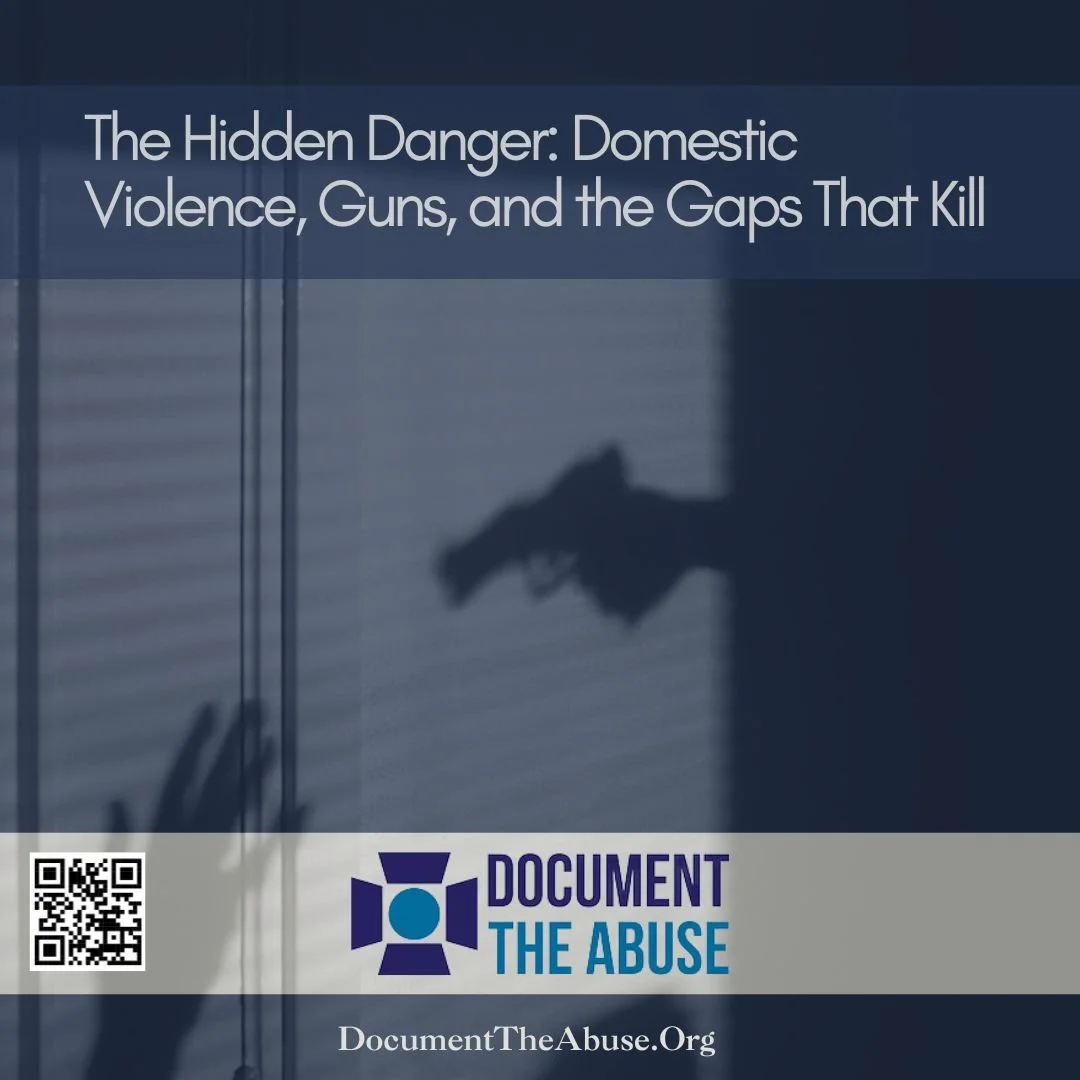
The Hidden Danger: Domestic Violence, Guns, and the Gaps That Kill
We’ve spent many years working with survivors, law enforcement, advocates, and legal experts to highlight how domestic abuse isn’t just a private matter, it’s a public safety crisis. One of the most deadly aspects of this crisis is the easy access abusers have to firearms, even when the law says they shouldn’t.

Strengthening the First Response
"Finding the courage to make that first call to law enforcement can be terrifying for a victim. They often don’t know what kind of help they’ll receive—or if it will truly apply to their unique situation. Too often, responders are simply ‘checking the box,’ offering generic suggestions that fail to address the specific needs of the case."

Petersons Honored at CUE Center National Missing Persons Conference
The CUE Center for Missing Persons recently held its National Missing Persons Conference in Wilmington, NC, bringing together families, advocates, and experts dedicated to finding the missing and supporting those left behind. Among the distinguished guests was Norma Peterson, Executive Director of Document The Abuse, who not only spoke at the event but was also honored alongside her husband, Paul Peterson, for their outstanding contributions.

International Women’s Day: Empowering Women Through Awareness and Action
Every year on March 8th, the world comes together to celebrate International Women’s Day (IWD), a global event recognizing the social, economic, cultural, and political achievements of women. It’s also a powerful call to action for accelerating gender equality. At Document The Abuse, International Women’s Day holds profound significance, especially as we advocate for women’s rights in abusive relationships and work to provide them with resources to reclaim their lives.

Steps to Healing After Abuse: A Survivor’s Guide
Healing from abuse is not a straight path, and there is no single “right” way to move forward. Every survivor’s journey is unique, but one thing remains true: You deserve healing, safety, and peace. Whether you have just left an abusive situation or are years into your recovery, it’s important to give yourself grace and acknowledge the strength it takes to heal.

How the Evidentiary Abuse Affidavit (EAA) Supports Legal and Law Enforcement Efforts
By bridging the gap between victim testimony and legal evidence, the EAA plays a critical role in ensuring that justice is served, even when victims are unable to testify.
How the EAA Applies in Crawford v. Washington and the Forfeiture by Wrongdoing Clause
In the landmark case of Crawford v. Washington (2004), the U.S. Supreme Court revolutionized the interpretation of the Sixth Amendment's Confrontation Clause, shifting the legal landscape regarding the admission of testimonial evidence in criminal trials. This ruling, alongside the Forfeiture by Wrongdoing Clause, has significant implications for the treatment of victims’ statements in abuse and domestic violence cases.

The EAA and How It Protects Victims of Abuse
The Evidentiary Abuse Affidavit (EAA) is a notarized legal document designed to protect victims of abuse by creating a record of the harm they have endured. It includes detailed accounts of the victim’s experiences, providing law enforcement, legal professionals, and advocates with vital information to act swiftly and effectively if the victim goes missing or is otherwise unable to advocate for themselves.